Pokémon TCG Glossary
"I pulled THE hit from set SV08.5, it was really my chase card from the SV block"
That is a lot of words that can sound confusing at first.
pokelu.ch put together this Pokémon TCG glossary to explain the terms collectors and players use all the time.
"I pulled THE hit from set SV08.5, it was really my chase card from the SV block"
That's a lot of words that can sometimes get confusing.
pokelu.ch decided to gather all these expressions from the Pokémon TCG universe and explain them.
I invite you to use Ctrl + F to find a term that once made you raise an eyebrow.
Alt / Alt Art / Mini Alt / Alternative / Full Art:
This refers to a special card rarity, usually called an "alternative".
Borrowed from the Japanese rarity classification, "Art Rare" cards are fully illustrated, meaning the artwork goes from one edge of the card to the other.
This naming gets pretty confusing internationally, because the Japanese also have the "SAR" category (Special Art Rare), BUT also "SR" (Special Rare).
And guess what? Those are also illustrated from edge to edge.
So obviously, I can already hear you: "But Elouan, how do you even tell the difference?"
At the time I'm writing this, the following rule still holds:
- "AR" cards are fully illustrated, in a rich scene, and do not have texture on the card (that little "fingerprint" effect)
- "SAR" cards are fully illustrated, in a rich scene, of an "EX" / "V" Pokémon (when it's not a Trainer) AND they do have texture on the card (that little "fingerprint" effect)
- "SR" cards are fully illustrated, of an "EX" / "V" Pokémon (when it's not a Trainer), but it's mostly a single subject on a relatively plain background (poor context). They also have texture on the card (that little "fingerprint" effect)
(first blog post and I'm already struggling to include images haha, we'll deal with that later)
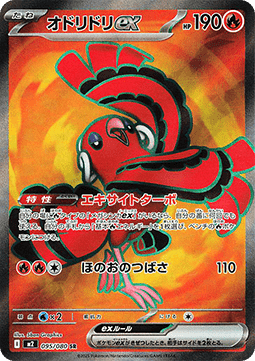
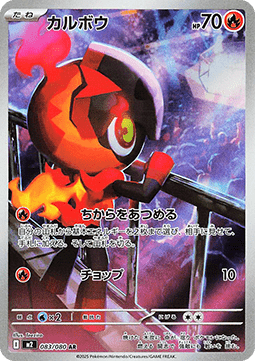
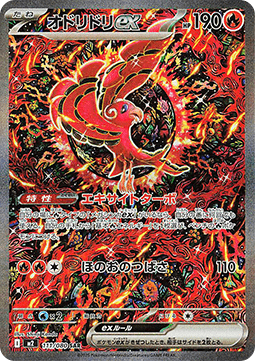
(we should be good now, as per the order, behold : a SR, an AR, and a SAR)
International cards do not have the "SR" / "AR" / "SAR" label at the bottom left like Japanese cards do. On the other hand, they do have stars:
- AR = one gold star
- SAR = two gold stars
- SR = two silver stars
And just to make things more confusing, the Pokémon community may refer to one of these categories, or all of them together, when they say "Full Art".
Anyway, that was the little "alt" tutorial, we can move on to the next definition now (I spent 15 minutes writing the text for this first word, what a nightmare, and I still have to translate all of this :) )
Artset:
Boosters from one expansion can have several different pack artworks. All of those artworks together are called an artset.
The term can also refer to a group of cards sharing the same artwork, one way or another. You can talk about an "artset" for the different evolutionary lines from 151 in alternate art form.
Bench:
In the Pokémon TCG, the bench refers to the Pokémon in play that are not active (they cannot attack, and they cannot be attacked directly).
They can still use some of their abilities though (which can deal damage).
Binder:
TCG binder, storing / protecting multiple cards.
Cards can be inserted from the top into dedicated pockets, or from the side (side loader).
(pro tip: binders with top-loading pockets are absolute horrors, avoid them and go for side-loading ones instead)
Block:
A block is a group of several Pokémon expansions / sets.
The Pokémon Company is pretty good at karate when it comes to promotion and marketing, so a block usually starts with the release of their current flagship video game.
Example: the Sword & Shield block starts with the release of the game of the same name on Switch and ends when Scarlet & Violet comes out.
This kind of marketing took a while to settle in though, so the early blocks have a slightly more... blurry logic. So you get Wizards for the first generations, and the EX block especially for the third.
Box Break:
The act of opening a booster box / display.
Booster:
A booster is the small pack containing random cards pulled from a Pokémon set, expansion, or release.
It's basically the fundamental unit of Pokémon TCG products.
The number of cards in a booster can vary depending on:
- the product language (Japanese boosters often have 5 to 7 cards, whereas so-called "international" boosters have 10 cards)
- the product era (international boosters now have 10 cards, but older ones used to have 11)
It contains a bonus Energy card and may contain a code card
Most Pokémon TCG products contain boosters (except decks):
- 36 boosters for Western displays / booster boxes (there can be exceptions, but that's the rule, and I admit I haven't checked every single display from every expansion)
- 30 boosters for Japanese displays / booster boxes, sometimes less for "special sets" (those displays then have 10 and look more like half displays)
- 8-9 boosters for ETBs (Elite Trainer Box) (8 before Scarlet & Violet, 9 since then)
- 4 per Pokébox
- around a dozen in UPCs (Ultra Premium Collection)
- The different collection boxes have varying amounts and I can't go through them one by one, but it's written on the box
The boosters found inside ETBs and Displays are from the same expansion.
I believe that's also true for most Pokéboxes, if not all of them.
For collection boxes though, it depends on the specific product, same thing for UPCs.
Centering:
Refers to the alignment of the artwork with the center of the card. You calculate it by looking at the borders of the card (yellow / silver).
Print quality isn't super consistent and centering issues are relatively common.
Chase card:
The "chase card" is THE most desirable card in a set. Usually the rarest one, the most expensive one, or the one featuring the most loved Pokémon.
Some cards are more sought after than others, but not everyone is chasing exactly the same cards, even if some of them usually get unanimous love.
You still with me?
Clim:
"La clim" is a French expression after a (bad) opening session, basically meaning that cold shower feeling when you hit absolutely nothing (you opened boosters and got no rare cards).
Coffret / Collection Box:
A collection box is a standard Pokémon TCG product. It contains promo cards exclusive to that product.
Collection:
I don't even know if this one really needs defining haha. It's obviously the full set of items owned by a person.
Condition:
The condition of a card or a sealed item. See Near Mint.
Common / Uncommon:
Refers to the Common and Uncommon card rarities.
Despite the two different names, they are both VERY common haha (you are guaranteed several of each rarity in every booster).
Deck:
In the Pokémon TCG, this refers to the selection of cards used during a Pokémon card game.
A Pokémon Deck is made up of 60 cards.
The Pokémon Company also releases products built around pre-made decks (= cards were preselected with a strategy in mind).
On the Pokémon collectibles market, these Decks have a reputation for being less in demand. That said, like all Pokémon products, very old decks (I'm thinking of the EX block) can sell for crazy prices when they're sealed, of course, because they become collector items.
Display / Booster Box:
A big cardboard box containing multiple boosters, with the exact quantity varying depending on language and era (see: booster).
A huge collector item, absolute holy grail for any self-respecting collector.
Energy:
Special card in the Pokémon TCG, used to allow Pokémon cards to "attack".
Found in large quantities across many Pokémon products and relatively uniform, Energy cards are generally not very desirable, except for some rarer special versions (thinking here of gold Energy or holo ones).
ETB / Elite Trainer Box:
An ETB is one of the best-known Pokémon TCG products. It generally contains several boosters, sleeves, dice and various accessories.
Before Scarlet & Violet, they usually had 8 boosters. Since Scarlet & Violet, they usually have 9.
Ex / V / Vmax / Vstar / Lv.X:
These are cards that are rarer than average, and stronger from a gameplay point of view.
This "stronger card" dynamic first appeared with the EX block. Several blocks later had "ex" cards again (XY, Scarlet & Violet, Mega Evolution).
Other blocks used the same logic under different names (Sword & Shield with V / Vstar / Vmax, Diamond/Pearl/Platinum with Lv.X).
Factory Line / Print Line:
Occasional factory defect on some fully illustrated cards.
It shows up as a line that appears more visible than it should.
God Pack:
Present only in some expansions, a god pack is a special and extremely rare booster containing only hits, among the best possible ones.
Gold:
Pokémon card rarity. Gold cards are theoretically the rarest, but they suffer from a certain lack of desirability because of how they look (I may not be fully objective on that one).
Since the Mega Evolution block, they've gained a bit more love.
Graded / Grading:
Used for a card that has been evaluated by a grading company (PSA / PCA / Beckett / TAG / CCC / CGC / Collectaura, just to name a few).
The goal is to certify the authenticity and condition of the card.
Hit:
A hit is, when opening a booster, the act of pulling / getting a rare and/or desirable card.
People generally start talking about a hit from the Japanese "RR" rarity onward, so the "Ex"/"V" cards.
Holo:
Refers both to cards having a shiny effect on the artwork (common/uncommon/rare) and to the shiny effect itself.
Illustration:
The drawing on the card, also called the "Art". Can also refer to the image printed on a booster wrapper.
Jumbo:
Oversized promo card (bigger than normal), often included in a collection box.
K:
Loose (Card/Booster):
Loose = sold individually / in bulk in this context. Loose cards are cards that are not graded.
Loose boosters are still sealed boosters (= not opened), but they are no longer inside a larger sealed product, which often acts as extra reassurance that the booster is authentic and hasn't been tampered with.
Master Set:
Refers to the full set of cards from one expansion, including the rarer cards.
Promo cards linked to that expansion may be included in that definition too, but that varies depending on each collector's interpretation.
Near Mint:
Mint (MT) and Near Mint (NM) refer to the card's condition. In theory, every card straight out of a booster is in "Mint" condition. "Mint" meaning "factory fresh".
By abuse of language, and because grading companies have had such a strong influence, factory defects often move cards into "Near Mint" territory.
Cards pulled from boosters tend to be considered NM by default.
In descending order, the conditions then go like this:
"Excellent" (EX): A card in good condition, usually showing at least one light flaw that is not a factory flaw (micro-scratch), visible up close
"Good" (GD): A card showing several wear flaws, relatively visible
"Light Played" (LP): At this point the corners have already had a rough life
"Played" (PL): You can start seeing light bends and other very sad little joys (discoloration maybe?)
"Poor" (PO): A catch-all category ranging from a cut-up card to one that went for a swim in the washing machine, including the one chewed by the dog
Off-center:
Used for a card whose centering is not ideal. A penalty if you're trying to get a good grade from a grading company.
Pack / Pull:
The act of taking cards out of a booster, opening cards. You "pull" them out of the booster. You pull them, basically. I admit I'm starting to get tired.
Pack is more often used for the act of pulling a hit.
Pokémon Scarlet & Violet (SV):
9th generation of Pokémon, one of the Pokémon TCG blocks, made up of several sets, with its most iconic one still to be decided hehe.
Pokémon Sword & Shield (SWSH):
8th generation of Pokémon, one of the Pokémon TCG blocks, made up of several sets, with "Evolving Skies" probably being the most iconic one.
Q:
Reverse:
Reverse cards are special holo cards: they are shiny versions of common / uncommon / rare cards.
Rip & Ship:
With the rise of streaming platforms like Whatnot, this refers to opening boosters live after an auction sale and shipping the contents afterward.
Scalper:
Buying large quantities of very specific items in order to create a (micro?) shortage effect, then reselling relatively quickly to profit from the price increase caused by that shortage.
Sealed / Resealed / Unsealed:
A sealed product is a product whose contents have not been altered and whose packaging condition is still decent.
Sealed products often have plastic wrapping which, if it has more or less large holes in it, can put some buyers off.
Resealed products are products whose contents have been tampered with / modified. The practice is highly controversial and generally considered a scam. I'm not an expert, but it's potentially illegal on top of that.
Finally, an unsealed product is an opened product.
Slab:
Refers to a graded card.
Sleeve:
Small soft plastic pouch used to protect a card against friction.
TCG / CCG:
Trading Card Game, Collectible Card Game
Toploader:
Small semi-rigid plastic holder able to contain a card and protect it better than a sleeve. You can combine both protections.
Trainer:
Special card with various effects during a game. As a general rule, they are less sought after than Pokémon cards.
Unboxing:
See Box Break (the act of opening a display, or even a collection box)
UPC:
UPC stands for Ultra Premium Collection. These are premium Pokémon TCG products that usually contain several boosters, promo cards, accessories and a more premium overall presentation.
V:
W:
X:
Y:
Z:
Related posts
-
 Pokémon Cards in Switzerland
Looking for Pokémon cards in Switzerland without having to become an expert before buying? Pokelu tries to make the...Read more
Pokémon Cards in Switzerland
Looking for Pokémon cards in Switzerland without having to become an expert before buying? Pokelu tries to make the...Read more -
 Display, ETB or Pokémon Collection Box: What Are the Differences and Which One Should You Choose?
Display, ETB, Pokémon collection box... on paper, all of this holds pokemon cards. In reality, these are not the same...Read more
Display, ETB or Pokémon Collection Box: What Are the Differences and Which One Should You Choose?
Display, ETB, Pokémon collection box... on paper, all of this holds pokemon cards. In reality, these are not the same...Read more -
 Storm Emeralda M6 and Pokémon’s 30th Anniversary: How to Shop Safely During the Hype
Storm Emeralda M6 and Pokémon’s 30th anniversary are bringing the hype back. Before ordering from an unfamiliar TCG...Read more
Storm Emeralda M6 and Pokémon’s 30th Anniversary: How to Shop Safely During the Hype
Storm Emeralda M6 and Pokémon’s 30th anniversary are bringing the hype back. Before ordering from an unfamiliar TCG...Read more
Leave a comment